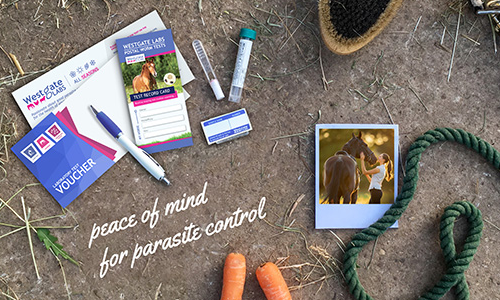
Spring is when parasite pressure builds and management choices matter most.
No matter the size, breed, or workload of a horse, all equines are at risk of internal parasites. Routine worming without testing is an outdated approach that can contribute to parasite resistance.
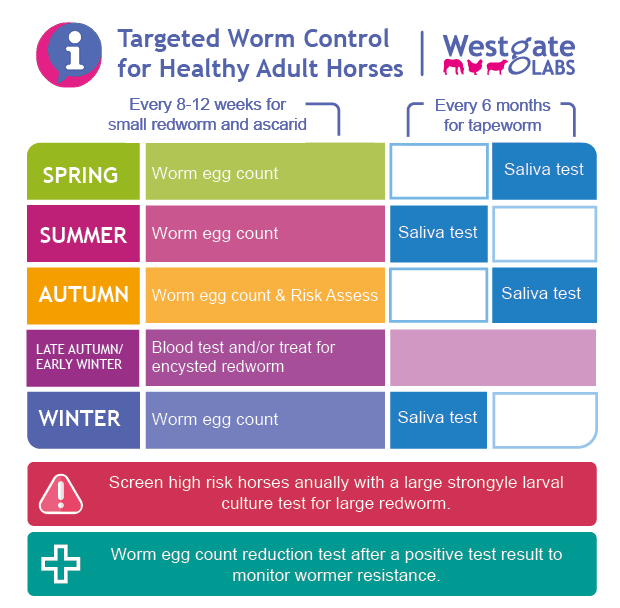
if you blood tested or treated for the possibility of encysted redworm in the late autumn/winter then now is the time to resume the regular testing programme.
Parasite control is not a single product or a one off decision, it's a process. Testing gives you vital information, but what happens next is just as important. Even when owners test regularly, poor pasture or dung management can allow parasite burdens to rebuild quickly, increasing reinfection, reliance on treatments and putting pressure on wormer effectiveness.

Key Tests this Season



We're here to provide you with peace of mind for your horse's health this Spring, with a range of easy to use, award winning lab tests and all customers get our expert advice from friendly and knowledgeable team of SQP's included in their tests and services.
Spring worm control means:
✅ Risk Assess every horse
✅ Worm egg count for redworm and ascarids
✅ EquiSal test for tapeworm if you haven't in the last six months
🔺 Look out for bots, pinworm and ticks
🟡 Monitor sand levels in the gut with a faecal sand test
🟣 Plan carefully for any foaling mares
🟢 Mange dung, grazing, treatment and biosecurity to reduce risk and reinfection.
Young, old, rescue horses and those with compromised immune systems, will need more consideration at this time of year than healthy adult horses.
GRAZING MANAGEMENT
Spring is a particularly important time to focus on management, as increased grazing and favourable weather conditions allow parasites to thrive. Making small, practical changes during this period can significantly reduce infection pressure throughout the season.
Good management includes regular poo picking to remove worm eggs from pasture and reduce reinfection, sensible grazing strategies to avoid overstocking, resting and rotating land where possible, and careful management of horses following treatment to reduce environmental contamination and reinfection.
As responsible horse owners our job is to keep parasite levels in check so that our horses remain healthy, to use the drugs we have responsibly to minimise the build-up of resistance and do our best to reduce parasite infection risk with good management. Don't forget the poo picking where you can!
Mares & Foals
If you’re expecting foals on the ground this year congratulations! Foals and youngstock require much more proactive treatment than older horses, you can find our handy guide for worming mares and foals here.
Stay vigilant this Spring and if you need any help with your worming then please contact our friendly team for free, veterinary approved advice.

other parasites to be aware of
Roundworm reminder.
We should be thankful for modern worming products which give us a safety net for treating those horses found to have significant parasite burdens. We should also be wary of forgetting some of the older drugs which still have their uses.
There seems to be an emerging problem with roundworm (ascarid) burdens in adult horses around the ages of six or seven. These animals have only ever been wormed with modern ‘mectin’ wormers, not always the drugs of choice for treating roundworm as there is rising ascarid resistance to these drugs.
To prevent this it would be wise to make sure that all youngsters are given a specific dose of either pyrantel or fenbendazole in their first year, targeting ascarids. Once dealt with this problem is unlikely to reoccur as ascarids are rarely seen in older animals.
PINWORM
The other parasite to keep an eye out for is the perennial pinworm problem which has also been extremely prevalent in recent years – perhaps because horses are kept in closer confinement over the winter and so are more likely to reinfect themselves from where they rub.
Watch for signs of tail rubbing or discomfort, a sticky substance around the anus or bean sprout type worms appearing in the droppings.
LIVER FLUKE
If your horse is grazing very wet/marshy land with reeds and/or cross grazed with sheep or cows then you might want to include an annual liver fluke test, March-May.
A bit about Tapeworm
Tapeworm should be targeted twice a year, every six months with an EquiSal Tapeworm test to determine whether your horse is one of the minority (fewer than 29%) of infected horses requiring treatment. Whether you test now in conjunction with your autumn worm egg count or at the same time as you treat or test for encysted redworm depends on your schedule and preferred wormer choices. Autumn is traditionally known as ‘tapeworm time’ as this was a good point in the year to worm hunting horses coming in from a summer at grass. It can be a useful way to remember to target tapeworm but there’s no reason to stick to this routine if another serves you better – and certainly no point in giving a wormer for the sake of it without knowing if there are parasites present to treat and if so, which ones?
Horse Worm Treatment Prescribing Options
Testing with Westgate means advice from our qualified SQP's is included, so please contact us to ensure you are using the correct chemical for every horse based on their risk profile, the parasites seen and the time of year. You can find general advice on treatments and what the worm your horse with here.
TESTING FOR WORMER RESISTANCE
Where you do need to step in and give a chemical to target redworm (strongyles) it is a useful exercise to do a reduction test to check whether any resistance to the chemical is present on the grazing land. Following a positive test result, give a wormer then 10-14 days later conduct another worm egg count to check that treatment has been effective.
Put Your Horse First This sPRING
With Westgate, you get more than a result. Our experienced team of SQPs support thousands of animal owners, yards, veterinary practices and prescribers with practical, independent parasite control advice. From assessing individual risk, interpreting results and providing treatment advice to exploring improvements in grazing management, we’re here to help our customers every step of the way, with no extra costs.
You can ALSO email, phone or even join the wormy chat on our lively Facebook, Instagram and TikTok pages, no question too small!
cUSTOMER fAVOURITES
SEASON PACKS
A cost effective way to organise your routine tests for the year is with our great value 4Count Season Packs containing everything you need for one horse for a year, or it can be split for multiple horses.
The 4Count pack contains x4 worm counts for redworm and ascarids, while the 4Count Plus pack also contains x2 EquiSal saliva tests for tapeworm.
Both packs offer a great value way to target your horse’s redworm and roundworm control for the year ahead.

SUBSCRIPTION SERVICE
Spring is the perfect time to choose our award winning subscription programme for the ultimate in simplicity and peace of mind for your parasite control.
With six different subscription types to suit your horse and your budget and helping you spread the costs of parasite control across the year, you receive a bespoke plan for each horse and the tests needed to target the right parasites at the right time, sent direct to your door.