does every horse still need treating for encysted redworm?
Our approach to encysted redworm is no longer about giving every horse the same wormer on the same date. It is about gathering enough information to make a sensible decision for the individual horse.
Parasite control advice is changing. As we learn more about wormer resistance, parasite behaviour and the effects of our changing climate, the familiar routine of treating every horse for encysted small redworm in the late autumn/winter is becoming much more individual.
That doesn't mean the advice you followed in the past was wrong. It means we now have more information to help us make better decisions.
Our aim remains the same: protect horses from parasite-related disease while using wormers carefully enough to preserve their effectiveness for the future.
Why do we worry about encysted stages of small redworm?
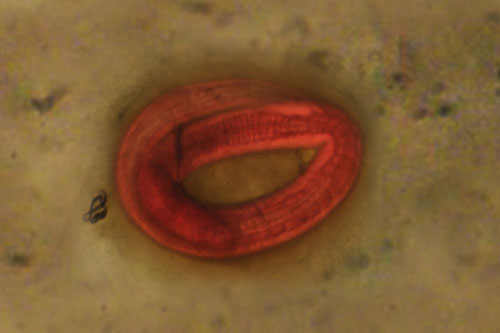
Small redworms, or cyathostomins, are extremely common in grazing horses. Their immature larvae can burrow into the lining of the large intestine, where they may remain encysted for a period of time.
If large numbers of larvae emerge together, they can cause larval cyathostominosis, a potentially fatal condition associated with diarrhoea, weight loss and colic.
Traditionally every horse was routinely given a larvicidal wormer in the autumn/winter.
However, there's a problem. Wormer resistance is increasing, and we have limited treatment options available. Moxidectin and five day fenbendazole are the only two licenced chemicals against encysted small redworm. Small redworm resistance levels to fenbendazole are so high that it can only be recommended for this use where sensitivity to this wormer has been demonstrated. While there is currently lower incidences of small redworm resistance to moxidectin we need to avoid using it unnecessarily so as to put additional selection pressure on this product.
The answer isn't simply to blanket treat every horse, neither do we think it is appropriate to do nothing without first assessing the individual horse.
Why is our advice evolving?
There are several pieces to this puzzle. Firstly, our winters are changing. Small redworm eggs and larvae on pasture are affected by temperature and moisture. Development slows in colder conditions, but increasingly mild UK autumns and winters mean we cannot assume that parasite activity on pasture simply stops once winter arrives.
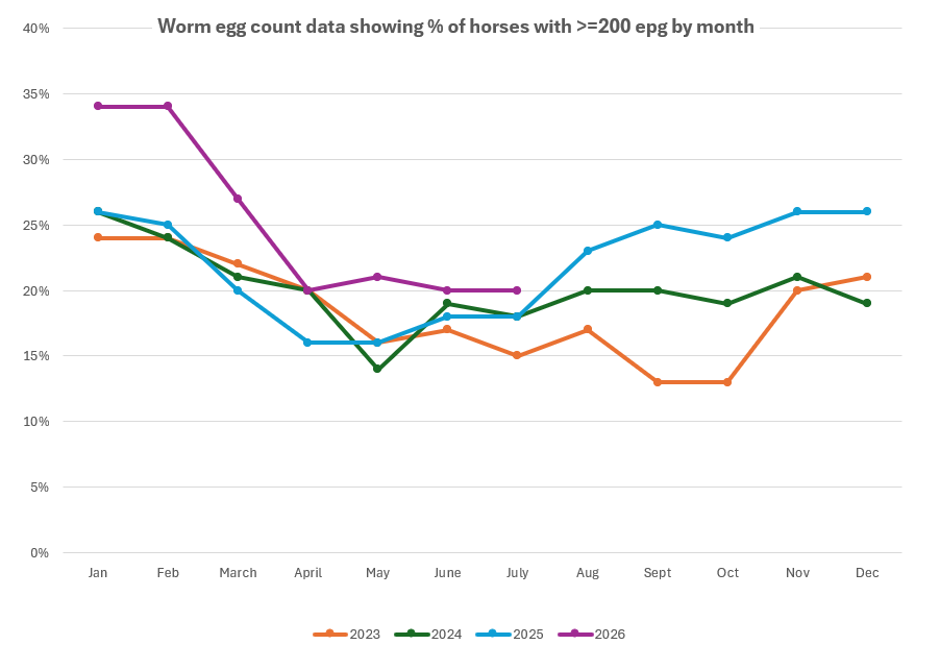
Worm egg count results data from more than 50,000 test results we conducted through autumn/winter 2025 - 2026, illustrates why continued surveillance matters. In January and February 2026, almost 35% of horses tested were shedding at or above our 200 eggs per gram treatment threshold.
This is because as horses graze through summer and autumn months, they accumulate small redworm burdens. In some years in these seasons the proportion of horses above the 200 epg threshold can be as high or higher than at other times of year. There is a growing rationale for identifying and treating horses that need it with a larvicidal, earlier in the autumn/winter period. This helps reduce egg shedding and contamination of pasture at a time when it becomes more difficult to manually remove dung through poopicking.
Secondly, we need to protect the wormers we have. Resistance to all of the main classes of wormer used against small redworm has now been reported. This means treatment needs to be justified, correctly dosed and followed up with a post treatment check to make sure it has worked.
Finally, not every horse carries the same risk. Health status, age, previous worm egg count results, grazing management, stocking density, treatment history, movement between yards and the other horses sharing the pasture all help build the picture.
So instead of asking, "Which winter wormer does my horse need?", we should first ask:
"Does my horse need treatment, and if so, when?"
Start with an autumn risk assessment
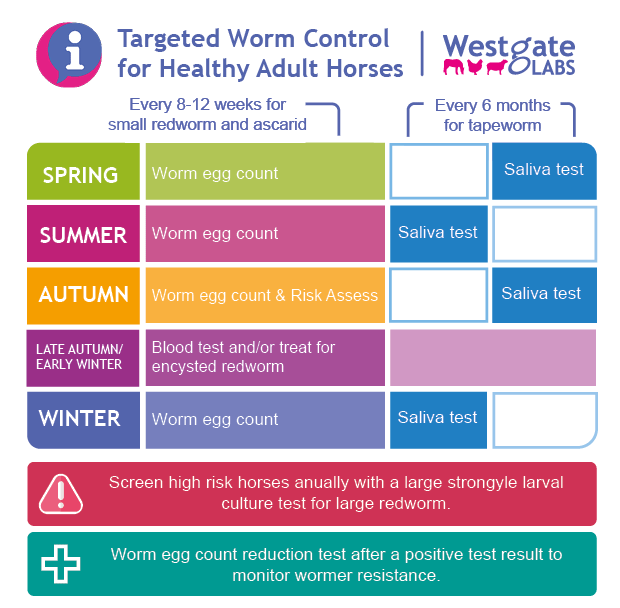
Every horse needs a parasite plan for encysted small redworm. In the autumn, combine a worm egg count with a review of your horse's individual risk factors. The CANTER risk assessment and WhatsYourWormRisk tools can help you work systematically through these.
A worm egg count gives us valuable information about the horse's current egg shedding and, when viewed alongside previous results, their parasite history. If tapeworm testing is due, this can be incorporated into the autumn assessment too.
At Westgate, we recommend considering treatment from 200 eggs per gram, rather than allowing egg shedding to climb higher through the autumn. Your prescriber can advise on whether treatment is appropriate, and which product should be used.
Testing before treatment also gives us a baseline for a faecal egg count reduction test to check treatment efficacy if required.
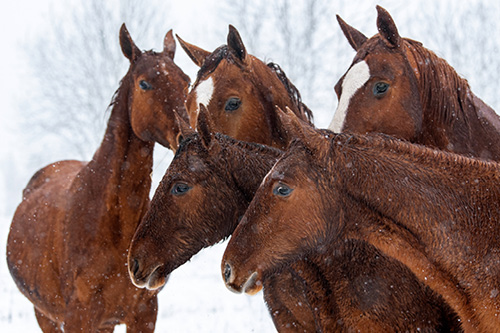
Which horses are likely to need larvicidal treatment?
Some horses have a greater risk of accumulating a significant small redworm burden and developing disease.
These include:
- youngstock from weaning to five years old
- adult horses assessed as medium or high risk
- horses with an unknown or inadequate parasite control history
For these horses, a larvicidal treatment will generally need to be considered during the autumn/early winter period, typically between October and January, with the precise timing based on their risk assessment, test results and management. Some high risk horses may require further treatment in the late winter/spring based on worm egg count results and grazing conditions.
Young horses need particular care because their immunity to parasites is still developing. Foals require their own age-appropriate programme, taking account of ascarids as well as small redworm, so please ask us, your vet or your prescriber for individual advice.
genuinely low-risk adult horses
An adult horse with consistently low worm egg counts, excellent pasture management and few other risk factors is very different from a young horse on heavily stocked grazing.
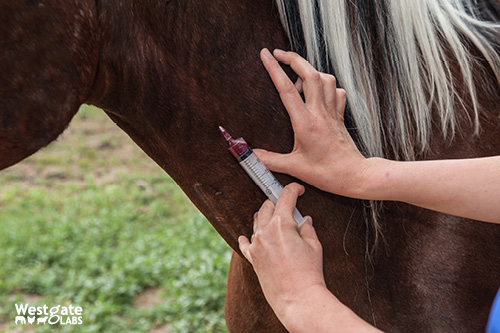
For these horses we recommend a small redworm blood test. If the autumn worm egg count is below the treatment threshold and the horse has been assessed as low risk, talk to your vet to organise this.
The test detects antibodies associated with small redworm infection, including adult and larval stages. It does not specifically measure encysted larvae, so it should never be interpreted on its own.
A negative result, considered alongside consistently low worm egg counts and a thorough risk assessment, can provide additional evidence that the horse is unlikely to be carrying a significant burden and may support a decision not to treat.
Your vet will interpret the result in the context of the individual horse.
What about waiting for the first frost?
You may have heard the traditional advice to wait until after the first hard frost before giving a winter wormer. For small redworm, we do not recommend using the first frost to determine treatment timing.
Waiting for frost is only relevant when treating for bots. Bot flies (Gasterophilus spp.) are killed off by the first hard frosts, so treating after fly activity has stopped avoids horses being reinfected after treatment.
Small redworm are different. Increasingly mild and unpredictable autumns and winters mean parasite activity on pasture can continue well beyond the point at which we might have expected it to slow. If your horse's risk assessment and test results indicate that small redworm treatment is needed, don't delay that treatment simply to wait for the first frost.
If you’re concerned about bots, speak to your prescriber.
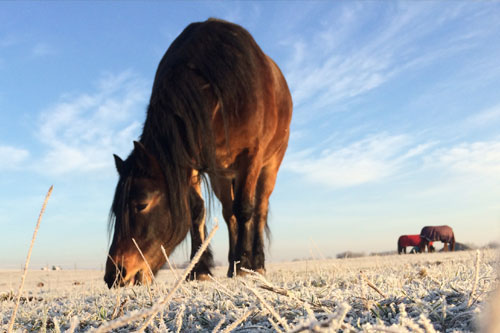
Keep worm egg count testing through winter
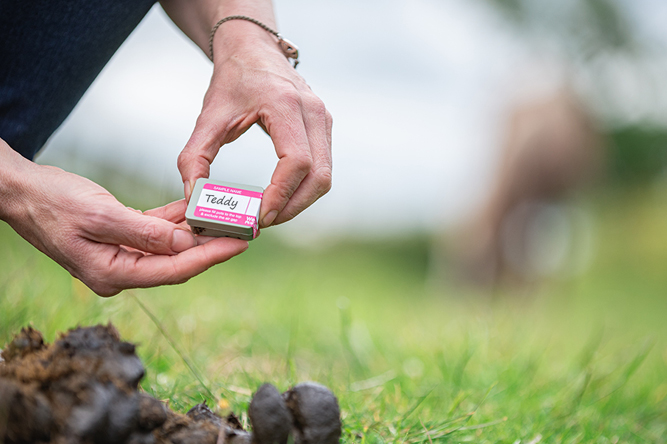
We are seeing significant egg shedding through the colder months. This increased infection potential, combined with it being more difficult to poo pick, emphasises the need to continue worm egg counts through the winter on the horse's usual 8 to 12-week schedule.
Some horses may require further intervention depending on subsequent results, pasture management and their individual circumstances.
Where treatment is required, monitoring its effectiveness is increasingly important too. Wormer resistance means we can no longer simply assume that giving a treatment has solved the problem.
Whatever your horse's individual plan, keep up the good work with the poo picking wherever it’s practical to do so.
Removing droppings from pasture interrupts the parasite lifecycle without using chemicals. Good grazing management reduces the number of infective larvae horses are exposed to and therefore reduces our reliance on wormers.
It is particularly important during mild autumn and winter weather, when parasite development on pasture may continue or worm stages may be more able to survive
Risk assess. Test. Manage.
At Westgate, we take a cautious approach. We want to avoid unnecessary treatments, and be confident that horses aren't being left at avoidable risk from encysted small redworm.
We are happy to support you with testing and risk assessment to help you decide on the appropriate next step for your horses, please get in touch.