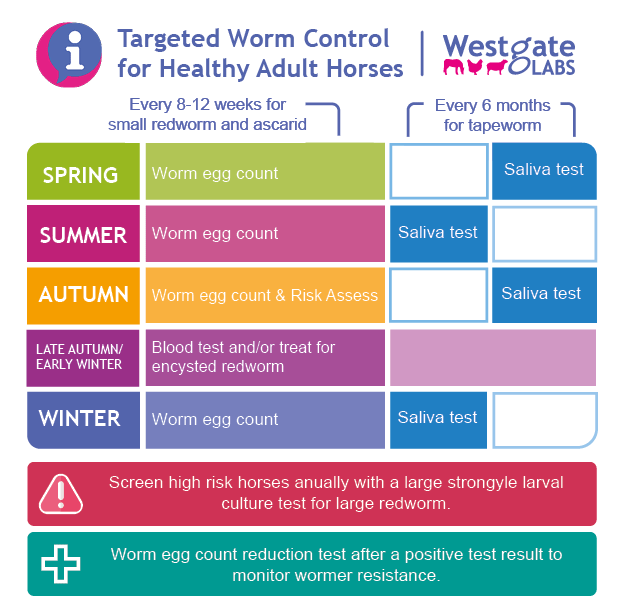
Parasite control is all about having the right information and trusted support to make the best decisions. This autumn we encourage you to worm egg count, EquiSal test (if needed) and risk assess to plan ahead for the possibility of encysted redworm.
Advice on timing of tests and treatments is evolving all the time. Read our updated guidance on addressing encysted redworm mid autumn/early winter, and whether your horse needs a blood test or treatment here:

As responsible horse owners our job is to keep parasite levels in check so that our horses remain healthy, to use the drugs we have responsibly to minimise the build-up of resistance and do our best to reduce parasite infection risk with good management. Don't forget the poo picking where you can!
Key Tests this Season


Autumn parasite control means:
- Risk assess every horse
- Worm egg count for redworm and ascarids
- EquiSal test for tapeworm if you haven't in the last six months
- Look out for bots, pinworm and ticks
- Monitor sand levels in the gut with a faecal sand test
- Manage dung, grazing, treatment and biosecurity to reduce risk and reinfection.
- Decide on your approach to encysted redworm.
- What to do and when will depend on your management routine and personal choice along with the parasite risk factor of your horse.
Young, old and rescue horses will need more consideration at this time of year than healthy adult horses.
 PARASITE RISK
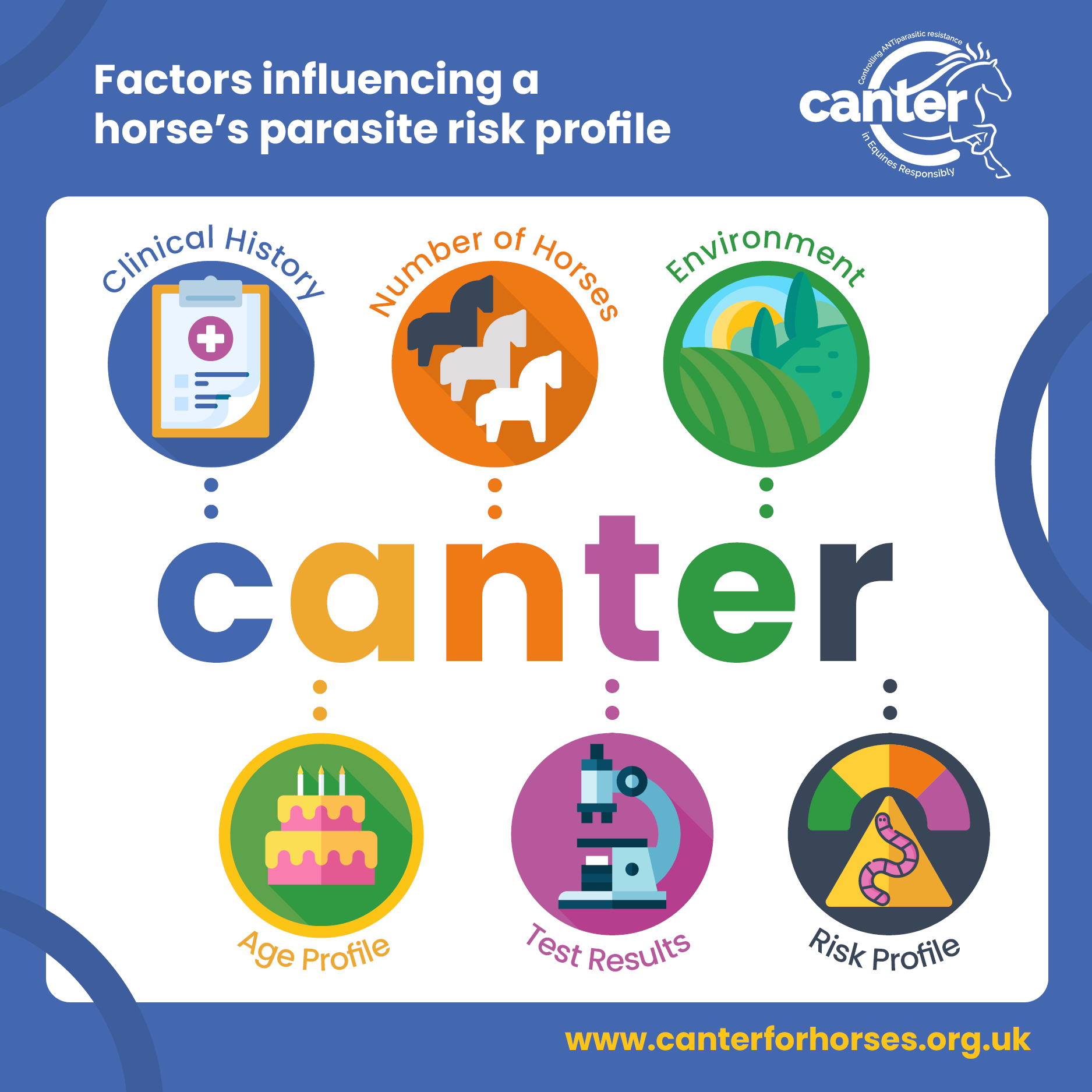
Not all horses carry the same parasite risk, with age, grazing conditions, and management practices all influencing whether a horse falls into a low, medium, or high-risk category. You may be surprised by how these factors can affect parasite risk, as anything that adds extra pressure on the body, such as underlying illness or environmental conditions, can make it harder for horses to cope with parasite challenge. With grazing quality reduced and many paddocks burnt off, horses are cropping closer to the ground and dung piles in search of forage, which further increases the chances of infection.
Best-practice approach is to first plan a test-based programme, the interval of testing based on a horse’s relative parasite risk profile as low, medium or high for disease caused by worm burdens.
If your horse is considered HIGH risk then also consider testing for large redworm which is an emerging threat and particularly recommended for studs and breeding operations with youngstock, competition and sales yards, highly stocked land, horses on minimal or selective worming schedules. Find out more here: Large Redworm
EXPERT SUPPORT
It’s this combination of trusted testing and accessible expert advice and support that has kept customers coming back to Westgate for decades, from those caring for top competition horses to our much-loved companion ponies. If in doubt about the best plan for your horse, please get in touch to speak to one of our qualified expert advisors, or chat to your prescriber to plan a best course of action.
OR

A bit about Tapeworm
Tapeworm should be targeted twice a year, every six months with an EquiSal Tapeworm test to determine whether your horse is one of the minority (fewer than 29%) of infected horses requiring treatment. Whether you test now in conjunction with your autumn worm egg count or at the same time as you treat or test for encysted redworm depends on your schedule and preferred wormer choices. Autumn is traditionally known as ‘tapeworm time’ as this was a good point in the year to worm hunting horses coming in from a summer at grass. It can be a useful way to remember to target tapeworm but there’s no reason to stick to this routine if another serves you better – and certainly no point in giving a wormer for the sake of it without knowing if there are parasites present to treat and if so, which ones?
Horse Worm Treatment Prescribing Options
Testing with Westgate means advice from our qualified SQP's is included, so please contact us to ensure you are using the correct chemical for every horse based on their risk profile, the parasites seen and the time of year. You can find general advice on treatments and what the worm your horse with here.
TESTING FOR WORMER RESISTANCE
Where you do need to step in and give a chemical to target redworm (strongyles) it is a useful exercise to do a reduction test to check whether any resistance to the chemical is present on the grazing land. Following a positive test result, give a wormer then 10-14 days later conduct another worm egg count to check that treatment has been effective.
Put Your Horse First This autumn
With Westgate, you get more than a result. Our experienced team of SQPs support thousands of animal owners, yards, veterinary practices and prescribers with practical, independent parasite control advice. From assessing individual risk, interpreting results and providing treatment advice to exploring improvements in grazing management, we’re here to help our customers every step of the way, with no extra costs.