Getting as accurate a result as possible from your test begins with collecting the dung sample.
Redworm and roundworm eggs, which are the parasites we are predominantly looking for when we carry out a worm egg count, are distributed fairly evenly through the faeces. This is what makes a worm count a very good test for detecting adult, egg laying infections of these worms.
Choose a day to collect samples when worming is due or overdue for most of the horses. This is important so that you don’t get a false result caused by wormer still working in your horse – unless you are carrying out a resistance test specifically to measure drug efficacy. The dung should be as fresh as possible but can still be posted the day after collection if kept in a cold place overnight.
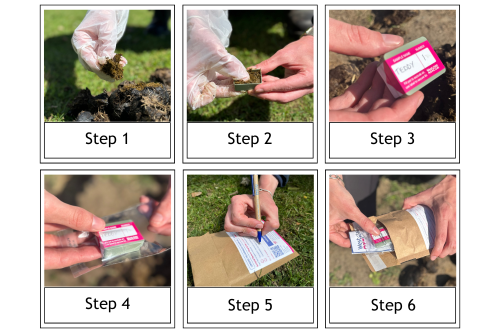
- Use the glove to pick up about five small pinches from different places across a fresh dung pile.
- Press the dung into the sample container, filling it to the top to exclude air. This is important to ensure we have sufficient dung for a representative test and to preserve the freshness of the sample.
- Label the sample with the horse’s name and number it if you are sending more than one sample in the envelope. Please write in ball point pen as water based inks may wash off.
- Put the container in the compostable bag and seal. Compost the glove on your muckheap.
- Put the bagged sample and submission slip into the prepaid return envelope.
- Complete the checklist on the back of the return envelope with the date of sample collection.
- Pop in the post box as early in the week as possible - Monday or a Tuesday are best!
Posting earlier in the week reduces the risk of the samples being held in a post box or a sorting office over the weekend - potentially causing the samples to arrive too old to test.
We have a 6 day viable testing window for fresh dung samples. If they are delayed in the post or there is insufficient faecal material to do the test, we’ll contact you and ask you to collect the sample again.
We'll carry out the requested lab test to generate your result the same day they arrive in the lab. Using the ‘Modified McMaster technique’, samples are tested twice and the result averaged between the two.
We test samples on the day they are received in the lab with results returned to you on the same day.
> Read about our Modified McMaster test process here
Liver fluke tests are conducted the same way as a standard worm egg count, using a different solution to float off the relatively heavier eggs of this parasite. Because of the challenge the liver fluke has in reproducing in the horse we will ask you to take three dung samples on consecutive days, refrigerating the first two and sending all of them for testing on the third day as per protocol advised by University of Glasgow School of Veterinary Medicine.
For Large Redworm Culture Test kits require 6 full pots of dung, to be taken from 4 different fresh dung piles, which can be taken from either one horse, or a composite group of up to 4 horses. Culturing takes 10–14 days so please allow two weeks for results.
Lungworm tests are conducted using a sedimentation test to separate out the lungworm larvae. Please send two full sample pots of dung when requesting this test.
Retail Kits
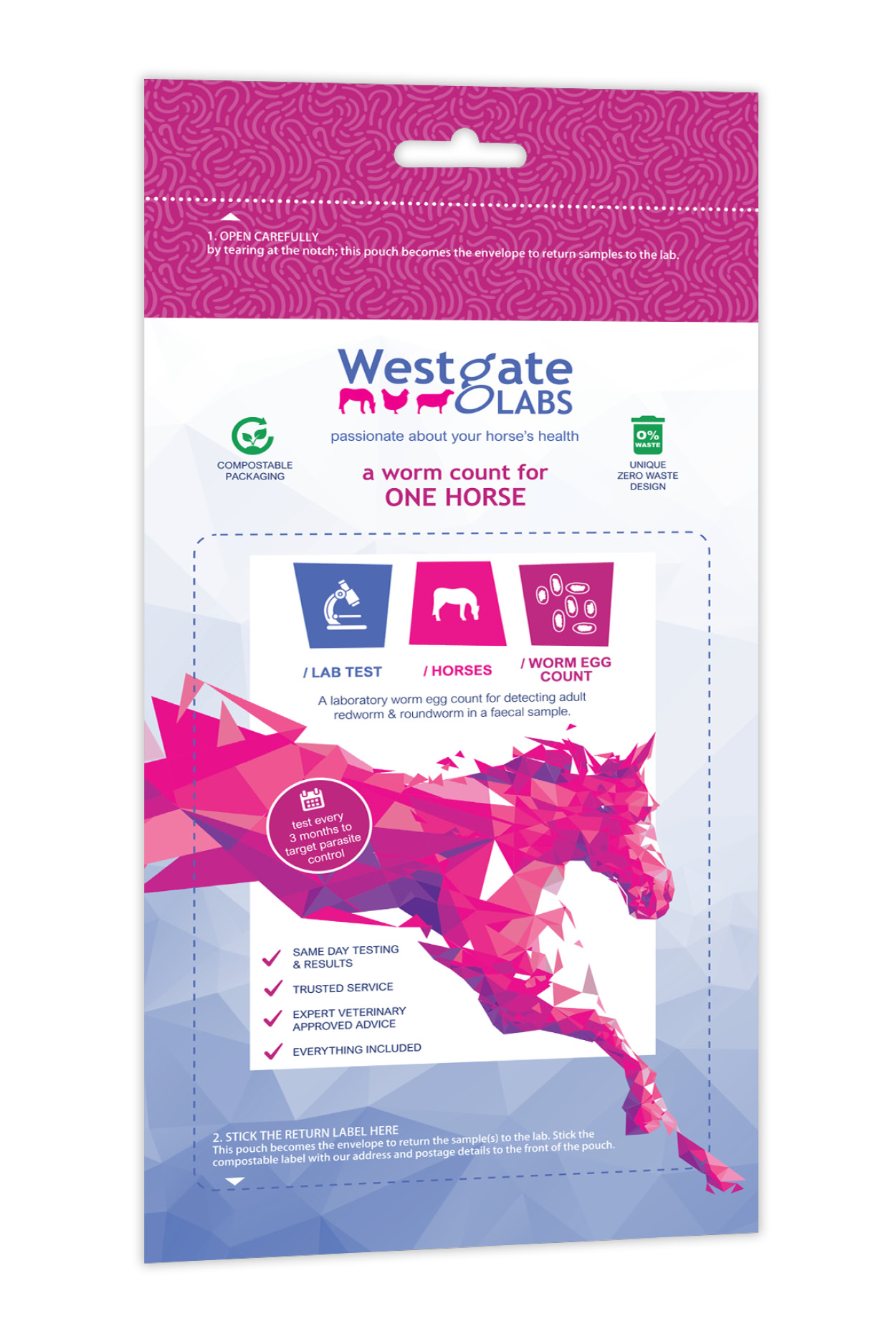
If you have one of our retail packs (pictured here) then follow the instructions below.
- Open the pouch carefully by tearing at the tear notch; this pouch becomes the envelope to return samples to the lab.
- Stick the compostable label with our address and postage details to the front of the pouch using the dotted line as a guide.
Take the sample: - Use the glove to pick up about five small pinches from different places of a fresh dung pile.
- Press the dung into the sample container, filling it to the top to exclude the air gap; this ensures we have sufficient dung to test and also helps to preserve sample freshness.
- Label the sample with horse’s name. Please write in ball point pen as water based inks may wash off.
- Put the container in the plastic bag and seal.
- Put the sample and voucher in the envelope. Compost the glove on your muckheap or include in the envelope.
- Complete the return checklist on the back of the pouch
Remove the tape on the back of the pouch and double fold to seal. Pop in the post box