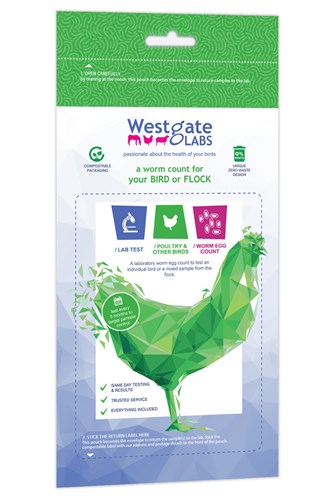
The benefits of using a worm egg count are that not only will testing first help to preserve our chemicals and slow down the build up of resistance, but fewer chemicals are better for your birds.
it is also better for the environment. Metabolites from worming chemicals get passed out in the droppings and are poisonous to invertebrates, aquatic life and flora such as fungi.
It often works out cheaper too!
Use regular worm egg counts to monitor your birds for signs of parasite infection. Only when the test indicates worms are present will you then need to step in with a treatment.
Checking your flock in this way will help to give you peace of mind that your birds aren’t carrying unwelcome parasites that will impact their health, while reducing the need for regular worming doses.
How to take and send a sample for an avian worm egg count
1. Open the pouch carefully by tearing at the tear notch; this pouch becomes the envelope to return samples to the lab.
2. Stick the compostable label with our address and postage details to the front of the pouch using the dotted line as a guide.
3. Take the sample and complete the return checklist on the back of the pouch
a. Collect fresh droppings from several places in the hen house, using the large plastic bag provided.
b. Mix together well by squeezing the bag. Fill the sample container using the mixed droppings sample.
c. Label with your own name and the sample name/number.
d. Put the container in the plastic bag and seal.
e. Put the sample and voucher in the envelope. Compost the glove on your muckheap or include in the envelope.
4. Remove the tape on the back of the pouch and double fold to seal. Pop in the post box